GlycoDepot
GlycoDepot

4-Methylphenyl 2-O-benzoyl-3,6-di-O-benzyl-4-O-(9-fluorenylmethoxycarbonyl)-1-thio-β-D-glucopyranoside

4-Methylphenyl 2-O-benzoyl-3,6-di-O-benzyl-4-O-(9-fluorenylmethoxycarbonyl)-1-thio-β-D-glucopyranoside 4-Methylphenyl 2-O-benzoyl-3,6-di-O-benzyl-4-O-(9-fluoren…
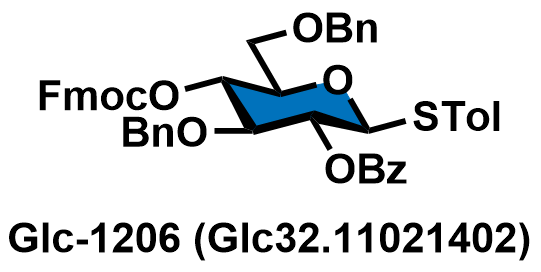
4-Methylphenyl 2-O-benzoyl-3,6-di-O-benzyl-4-O-(9-fluorenylmethoxycarbonyl)-1-thio-β-D-glucopyranoside
Pricing
Request a quote

Size

Quantity

  • ISO 9001:2015 facilities · CoA + batch tracking with every shipment
  • Worldwide shipping · dry-ice option for thermolabile reagents
  • Research Use Only — not for human or veterinary clinical use

About this product

4-Methylphenyl 2-O-benzoyl-3,6-di-O-benzyl-4-O-(9-fluorenylmethoxycarbonyl)-1-thio-β-D-glucopyranoside 4-Methylphenyl 2-O-benzoyl-3,6-di-O-benzyl-4-O-(9-fluorenylmethoxycarbonyl)-1-thio-β-D-glucopyranoside is a synthetically modified thioglycoside derivative designed for specialized applications in carbohydrate chemistry and medicinal research. This compound integrates multiple protective groups to enable controlled reactivity in glycosylation reactions and biochemical studies. Structural Features Core structure : β-D-glucopyranoside backbone with a 4-methylphenyl thio-group at the anomeric position (1-thio linkage), enhancing stability compared to O-glycosides. Protective groups : 2-O-benzoyl : Electron-withdrawing ester group that directs glycosylation reactivity. 3,6-di-O-benzyl : Ether protections providing steric bulk and alkali stability. 4-O-Fmoc : 9-Fluorenylmethoxycarbonyl group offering orthogonal deprotection under mild basic conditions. Physicochemical Properties Property Value Molecular formula C₄₂H₃₈O₈S Molecular weight 702.82 g/mol Purity Typically ≥95% Appearance White crystalline solid Stability Air-stable at room temperature Synthetic Utility This compound serves as a key intermediate in: Glycosylation reactions : The thio-group acts as a leaving group, while protective groups enable sequential deprotection for selective glycosidic bond formation. Glycoconjugate synthesis : Fmoc protection at C4 allows precise modification of hydroxyl groups in oligosaccharide assembly. Enzyme inhibition studies : Demonstrated potential as a glycosidase inhibitor for diabetes and cancer research. Synthetic Considerations Prepared through multi-step protection strategies: Initial thioglycoside formation using BF₃·OEt₂ catalysis Sequential benzoylation (EDC/DMAP coupling) and benzylation Fmoc installation via carbamate chemistry Typical purification by silica gel chromatography using hexane/EtOAc gradients Applications Drug discovery : Scaffold for developing glycosidase inhibitors Chemical biology : Probe for studying carbohydrate-processing enzymes Materials science : Building block for glycoarrays and neoglycoconjugates This compound's strategic protection pattern and stability make it particularly valuable for complex oligosaccharide synthesis requiring precise regiochemical control. Citations: https://www.chemsrc.com/en/cas/20274-94-6_91115.html https://pubchem.ncbi.nlm.nih.gov/compound/1326804-93-6 https://www.rsc.org/suppdata/c8/sc/c8sc01743c/c8sc01743c1.pdf https://glycomindsynth.com/product_detail/517/Monosaccharide https://pmc.ncbi.nlm.nih.gov/articles/PMC7656231/ https://www.bocsci.com/product/4-methylphenyl-2-o-benzoyl-3-4-di-o-benzyl-6-o-9-fluorenylmethoxycarbonyl-339431.html https://synthose.com/products/ML822 https://synthose.com/products/MG340

You may also need